Based on : EASA · Climate change and aviation metrics · Lufthansa Group · Cathay Pacific
Read the unit and the boundary
A fuel-related CO₂ estimate and a broader climate-impact estimate answer different questions. EASA explains that aviation has CO₂ and non-CO₂ effects, and that expressing the latter as CO₂-equivalent depends on the chosen metric, atmospheric background and time horizon. Do not treat every figure labelled ‘carbon’ as the same measurement. Record whether the calculation covers flight operations, fuel lifecycle or additional climate effects.
Do not invent a universal multiplier
A historical sector estimate does not supply a precise correction factor for every individual flight. Conditions and method matter, and EASA identifies substantial uncertainty in non-CO₂ effects. If a calculator includes an uplift, look for its source, horizon and treatment of contrails. Do not add that uplift again to an output that already includes it. A decimal-heavy result is not evidence of equally precise scientific certainty.
Compare like with like
A fictional estimate of 100 kg CO₂ and another of 150 kg CO₂-equivalent cannot prove that the second flight emits 50% more CO₂. First align journey, cabin allocation, passenger basis, lifecycle boundary and non-CO₂ treatment. Keep the source date and assumptions with the comparison. If methods cannot be reconciled, present both with their definitions rather than ranking them as equivalent observations.
A case from the news
September 9, 2026 — Lufthansa Group announces the final supplemental certification phase for AeroSHARK on Airbus A330-200 and A330-300 aircraft on 9 September 2026. A Discover Airlines A330-300 takes part in tests before and after application of the micro-grooved film. The technology aims to reduce aerodynamic drag and fuel use. The release describes A330 approval still being sought from EASA through ground and flight testing; existing Boeing 777 approval does not automatically cover Airbus aircraft.
A case from the news · 2
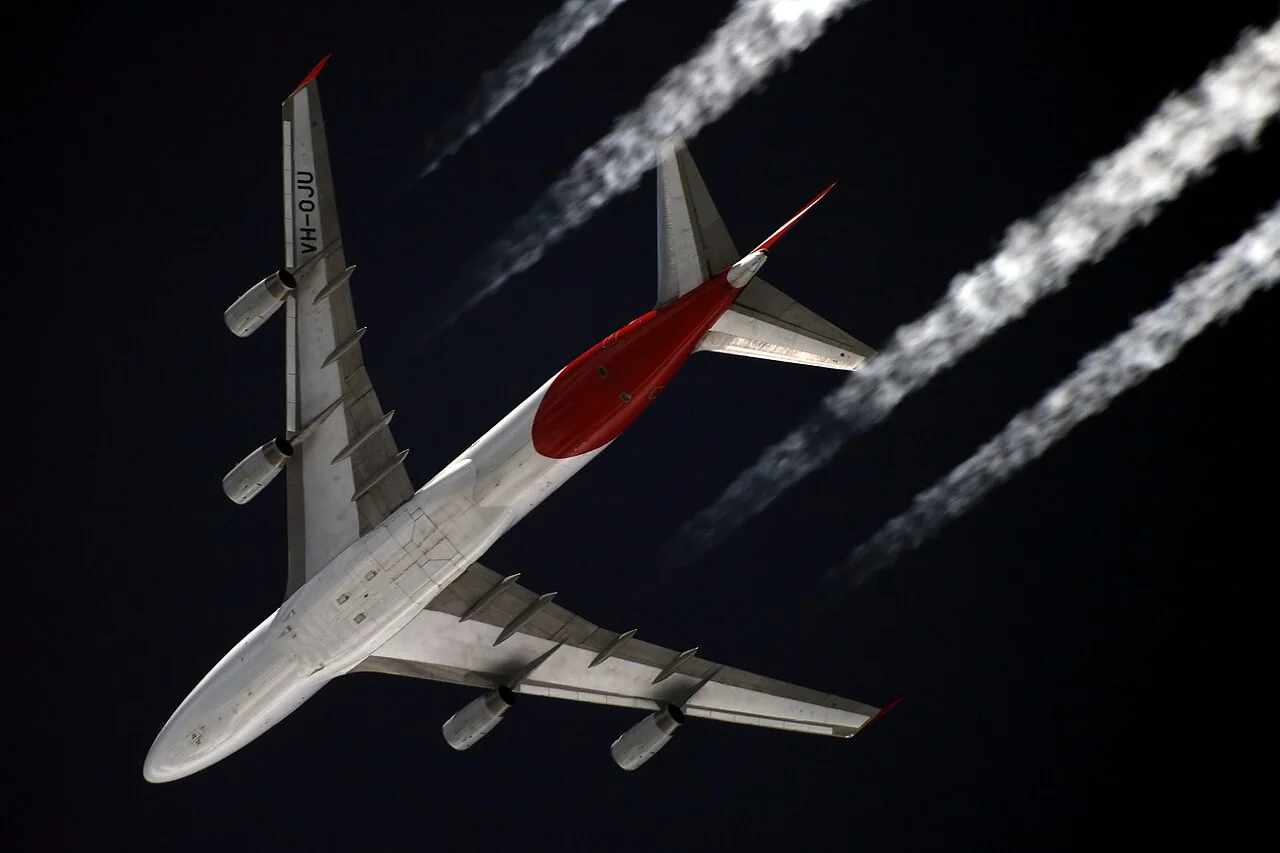
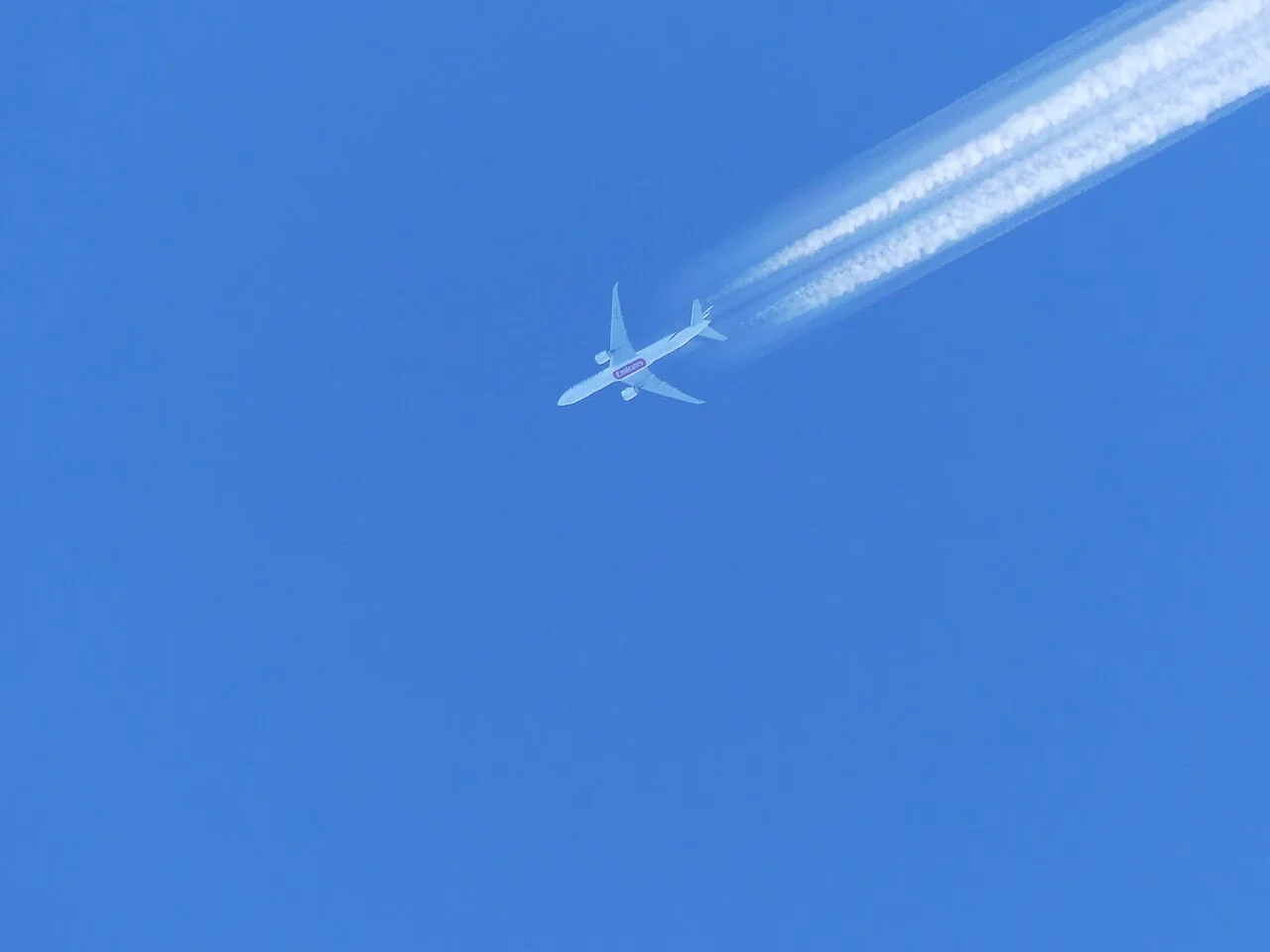
September 7, 2026 — Cathay Pacific and Google announce contrail avoidance trials using artificial intelligence on 7 September 2026. The airline says the work includes ultra-long-haul flights and contributes research data for Asia-Pacific. The trials are designed to assess operational constraints and potential climate benefits in real conditions. The release describes ongoing research, without publishing a measured reduction across Cathay’s entire network.
Background guide prepared with AI assistance. Teaching examples do not necessarily describe real situations. For a travel decision, consult current information from the airline, airport or competent authority.