Based on : EASA · Climate effect of aviation contrails · Lufthansa Group · Cathay Pacific
Some persistent contrails form only in cold, ice-supersaturated air, creating an opportunity to test small altitude changes.
Why only some trails persist
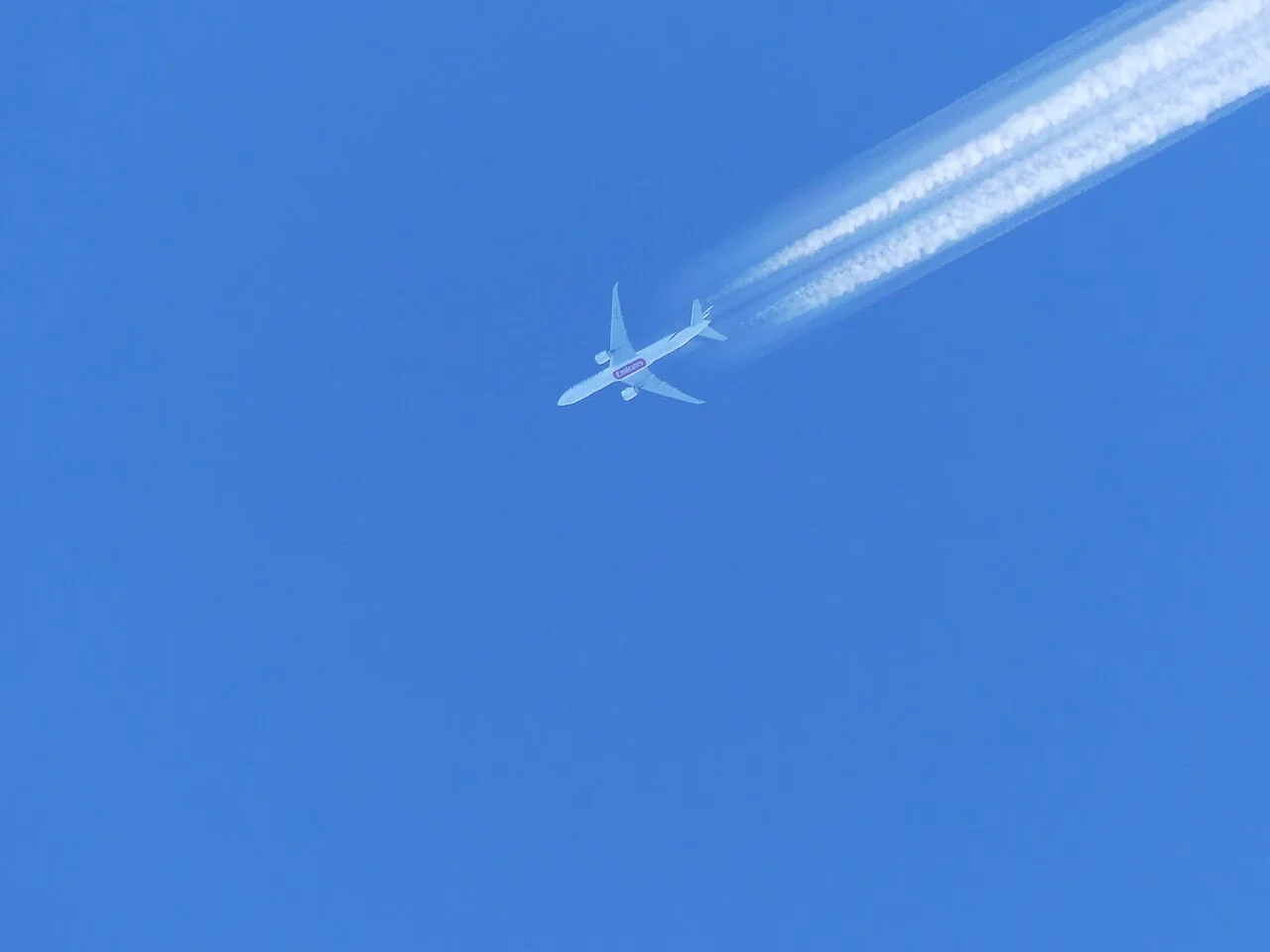
A visible trail can disappear quickly or spread into long-lived ice cloud depending on temperature and humidity at altitude. These narrow atmospheric regions are difficult to observe and forecast precisely, so models work with probabilities rather than certainties.
A small change can avoid a region
In suitable conditions, climbing or descending a few thousand feet may leave the ice-supersaturated layer. The maneuver must remain safe, compatible with air traffic control and efficient enough that additional carbon dioxide does not outweigh the expected benefit.
Evidence must guide deployment
Trials compare forecasts with satellite and aircraft observations, then measure fuel penalties and operational feasibility. The objective is not to eliminate every contrail but to prioritize situations with a credible, material climate benefit.
A forecast is a decision aid, not proof
Persistent contrails depend on atmospheric conditions along a specific path and altitude. Forecasts of those conditions contain uncertainty, and a changed route must still satisfy safety, fuel and traffic constraints. To evaluate a climate-aware routing claim, ask what conditions were predicted, what was actually flown and how the effect was measured afterward.
A case from the news
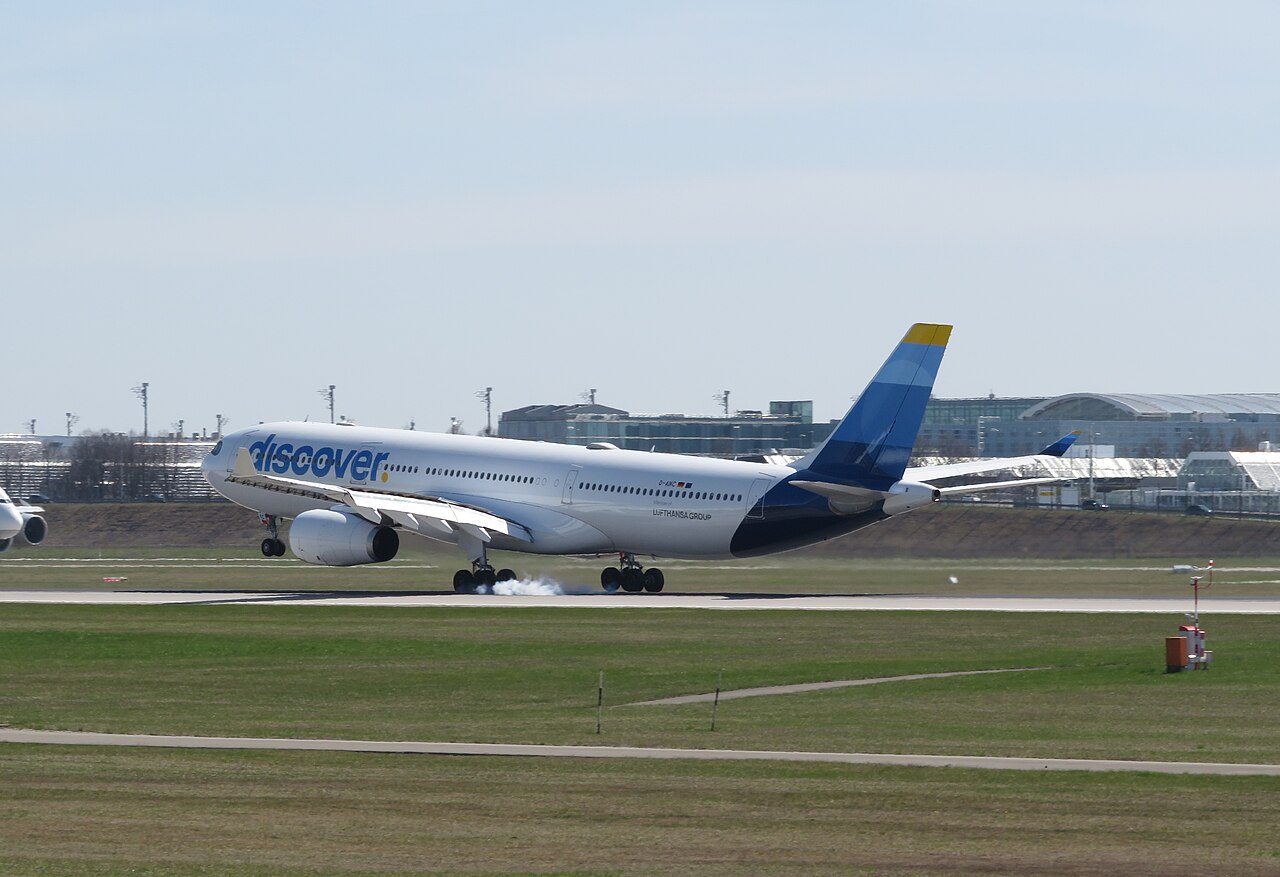
September 9, 2026 — Lufthansa Group announces the final supplemental certification phase for AeroSHARK on Airbus A330-200 and A330-300 aircraft on 9 September 2026. A Discover Airlines A330-300 takes part in tests before and after application of the micro-grooved film. The technology aims to reduce aerodynamic drag and fuel use. The release describes A330 approval still being sought from EASA through ground and flight testing; existing Boeing 777 approval does not automatically cover Airbus aircraft.
A case from the news · 2
September 7, 2026 — Cathay Pacific and Google announce contrail avoidance trials using artificial intelligence on 7 September 2026. The airline says the work includes ultra-long-haul flights and contributes research data for Asia-Pacific. The trials are designed to assess operational constraints and potential climate benefits in real conditions. The release describes ongoing research, without publishing a measured reduction across Cathay’s entire network.
Questions about this topic
Is avoiding contrails always a climate benefit?
Not automatically. Evaluate forecast uncertainty, extra fuel and the expected warming effect of the contrail avoided. A visible trail alone does not quantify its climate impact.
Does a forecast prove a contrail was avoided?
No. Prediction, operational action and measured outcome are different evidence stages. A climate claim should state its method and uncertainty.
Background guide prepared with AI assistance. Teaching examples do not necessarily describe real situations. For a travel decision, consult current information from the airline, airport or competent authority.