
Passenger
Airside or landside transit: the document checks before booking
An international connection does not automatically mean you remain outside border control.

Desk
Practical context for baggage, connections, disruption and the international passenger journey.

Compare the whole transfer process and recovery options, not only the advertised connection time.
MCT is the shortest scheduled interval accepted for a defined transfer, not a guarantee that every passenger will comfortably make it.
Bag tags, minimum connection times, security rules and transfer systems decide whether luggage follows the passenger through a hub.
An international connection does not automatically mean you remain outside border control.
Baggage, seats, airport access and flexibility can change which ticket offers the better value.
The departure time is not the deadline for every step of the airport journey.
A gate-checked suitcase needs a second check before it leaves your hands.
Compare the whole transfer process and recovery options, not only the advertised connection time.
Verified digital credentials may reduce repeated document checks where participating systems connect.
MCT is the shortest scheduled interval accepted for a defined transfer, not a guarantee that every passenger will comfortably make it.
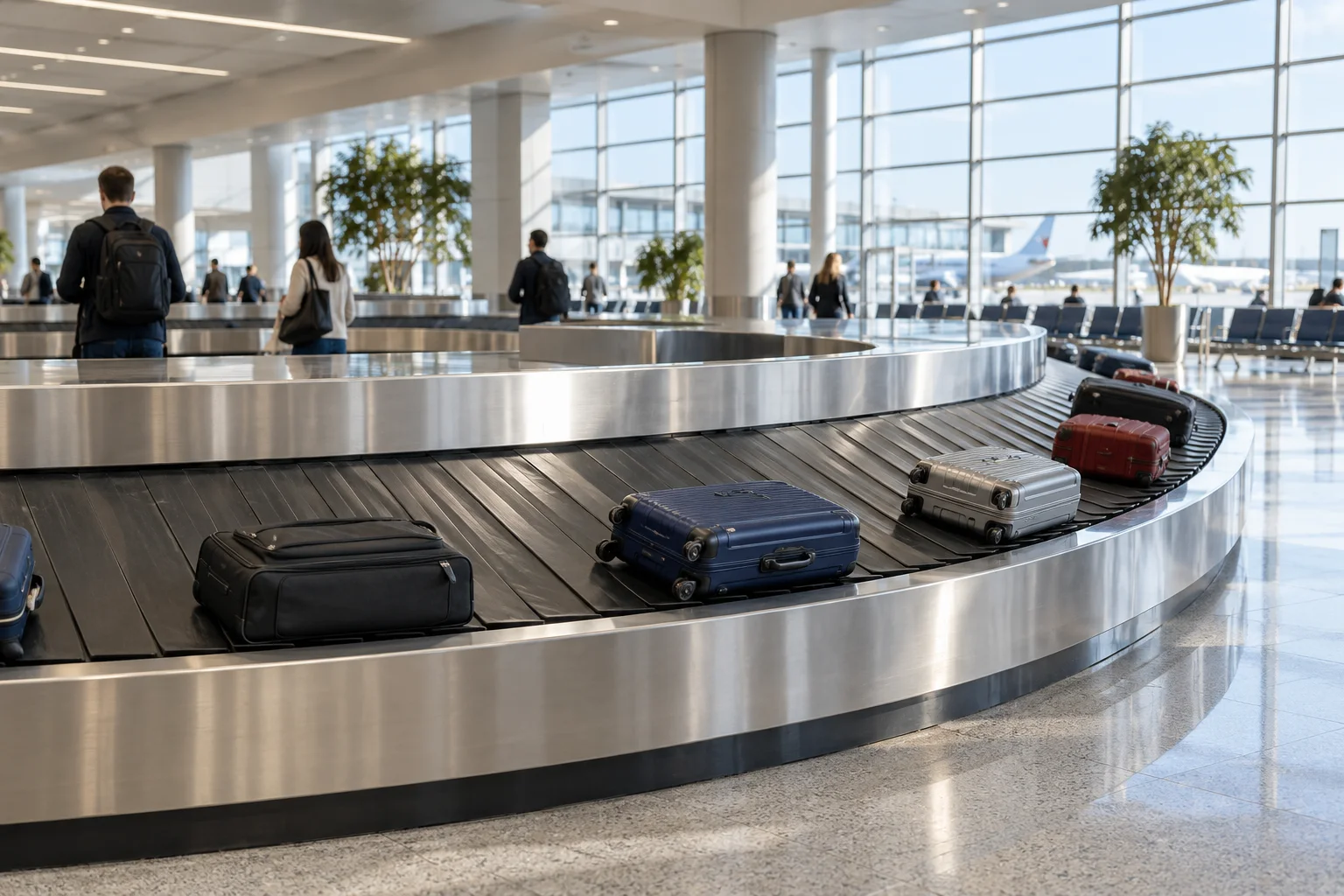
Bag tags, minimum connection times, security rules and transfer systems decide whether luggage follows the passenger through a hub.
Jurisdiction, operating carrier and the cause of disruption can matter as much as the delay itself.
Passenger
A connection depends on the operating carriers, terminal, baggage transfer, entry rules and whether the tickets are issued together. The published minimum connection time is a floor for supported itineraries, not a guarantee against disruption.
Keep the booking reference and written notifications. Rebooking, care and compensation depend on the applicable jurisdiction, cause of disruption and itinerary; confirm current rules with the carrier and relevant authority.
No. Connection protection and permission to cross a border are separate. Check the airside or landside transfer path with your own nationality and documents, including after disruption.
Match baggage, seat selection, airport transport, boarding deadlines and change conditions. Include the cost and responsibility of a separate-ticket transfer rather than comparing base fares alone.